
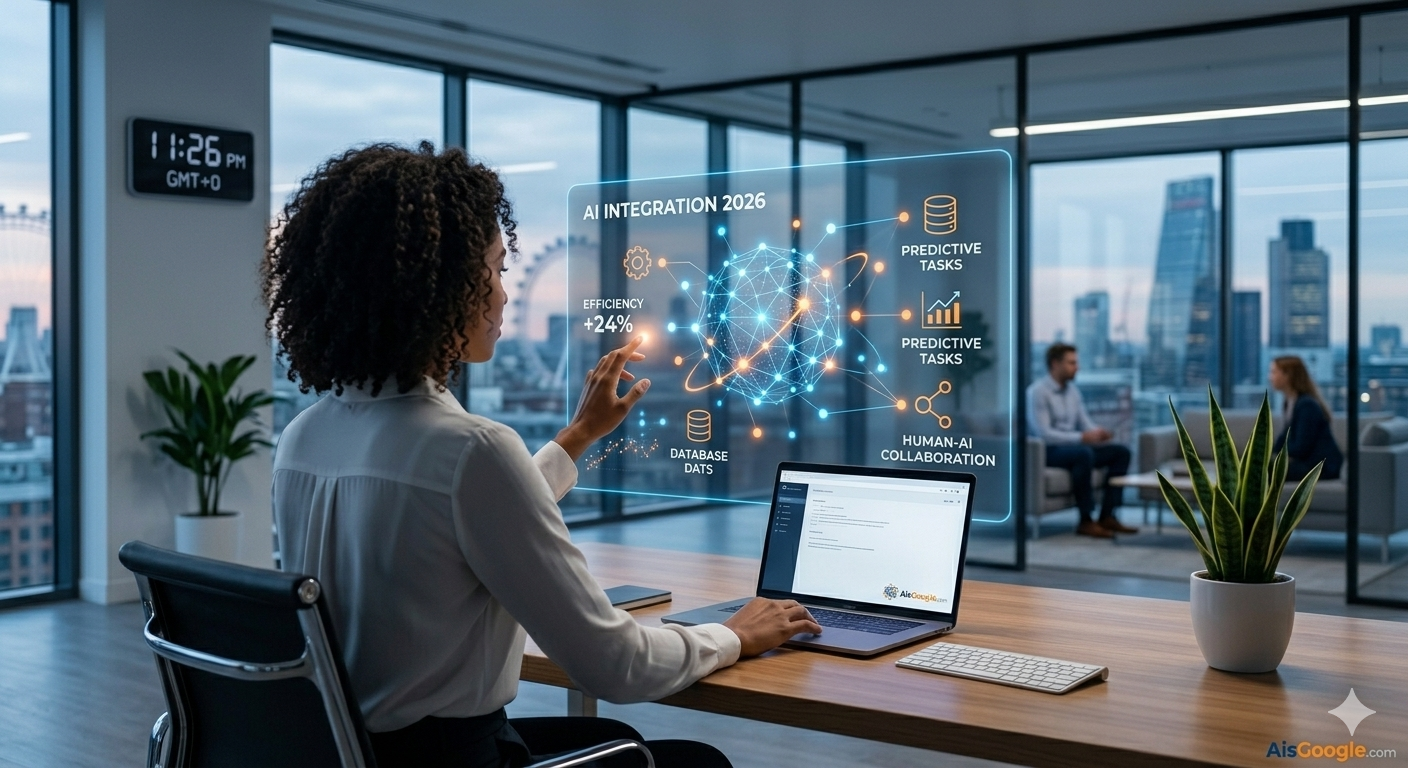
As we move through 2026, the narrative surrounding Artificial Intelligence has shifted. We are no longer talking about “if” AI will change our lives—we are witnessing a total reconstruction of the global professional landscape. For businesses in the US and UK, AI has evolved from a simple chat interface into a silent, omnipresent partner that manages the complexities of modern work.
At AisGoogle, we track these shifts daily. Here is how the “Generic” AI landscape has fundamentally changed the way we perceive productivity this year.
1. From Command-Based AI to Intuitive Agents
In previous years, using AI required precise prompting. In 2026, we have entered the era of Intuitive AI Agents. These systems don’t just wait for instructions; they observe your workflow, predict your needs, and execute background tasks before you even realize they are necessary. Whether it’s preemptively organizing your digital workspace or flagging potential project delays, AI has become proactive.
2. The Democratization of Expertise
One of the most significant “Generic” impacts of AI is the leveling of the playing field. High-level data analysis, sophisticated coding, and professional-grade graphic design are no longer gatekept by years of technical training. AI tools act as a “Force Multiplier,” allowing a solo entrepreneur in London or a small team in New York to compete with multinational corporations.
3. The “Human-Centric” Automation Trend
There was a fear that AI would make work mechanical. Paradoxically, the opposite has happened. By automating the “robotic” parts of our jobs—data entry, scheduling, and basic reporting—AI has freed up humans to focus on what they do best: Strategy, Empathy, and Creative Problem Solving.
4. Ethical AI and Data Sovereignty
In 2026, the conversation has moved toward “Ethical AI.” Users are now more conscious of their data. The leading AI platforms today are those that prioritize privacy and transparent algorithms. For any professional using these tools, understanding the “Privacy First” approach is no longer optional—it is a business requirement.
Conclusion
The “Generic” state of AI in 2026 is one of seamless integration. It is no longer a separate tool you “open”; it is the fabric of the modern digital office. As we continue to explore specific tools in our other categories, remember that the foundation of AI success lies in understanding this broader evolution.
